
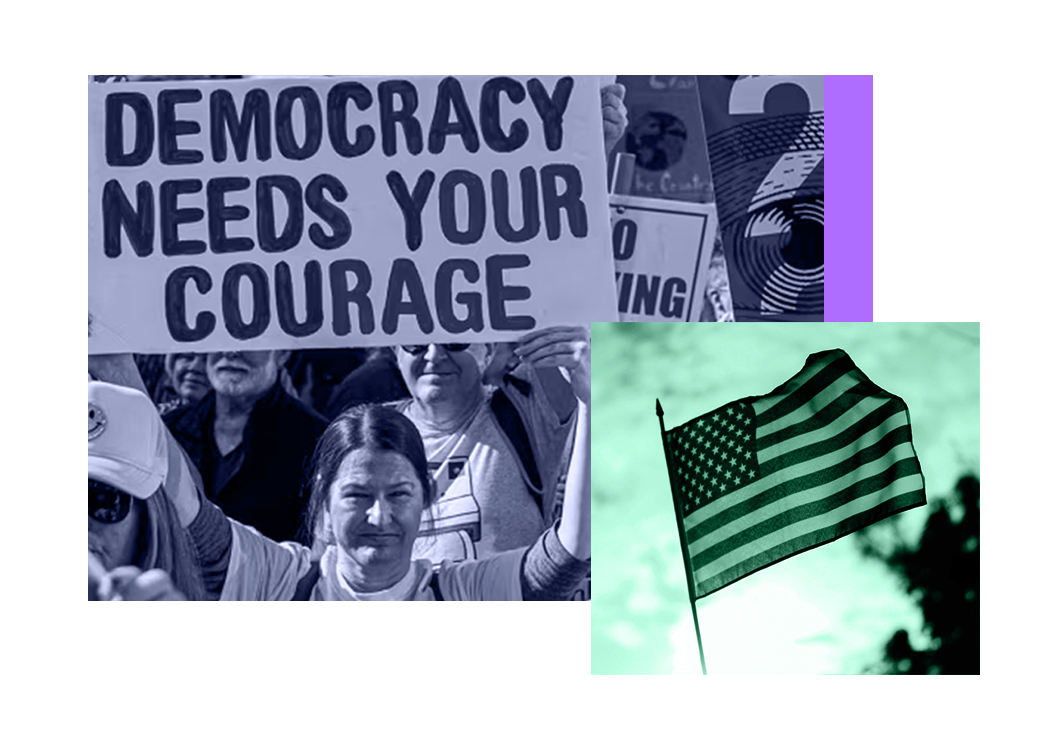
This section covers First Amendment rights when protesting, including free speech, assembly, and interactions with law enforcement.
- You have the right to free speech in public spaces. Your right to free speech is strongest in public spaces like streets, sidewalks, and parks. In other public areas, such as in front of government buildings, you may also have this right depending on the space, as long as you don’t block access or interfere with the intended use. The owners of private spaces (such as a business or a home) can determine their own rules for that private space.
- However, marches or parades on public property usually require a permit if they block traffic. If your city requires a permit and the protest doesn’t have one, marching in the street and blocking traffic is illegal.
- You have a right to photograph anything in plain view in public places. You may legally film or photograph anything in plain view in a public place, including law enforcement (even if they tell you to stop recording) and federal buildings.
- If you are stopped at a protest:
- You have the right to remain silent. If you are arrested while protesting, you have the right to remain silent and to ask why you are being arrested. Say: “I am going to remain silent,” or “I want to speak to a lawyer.”
- You have the right to leave unless you are under arrest. If you are stopped by law enforcement on the street, but are not under arrest, you can ask the officer if you are free to go. Ask: “Am I free to leave?”
- You have the right to refuse a search. Immigration and law enforcement officers cannot search you or your property (phone, house, car, etc.) without a search warrant signed by a judge. Ask: “Do you have a judicial warrant? I do not consent to a search.”
Read more from the National Lawyers Guild for an understanding of your rights and legal protections when engaging in public demonstrations and protests.