
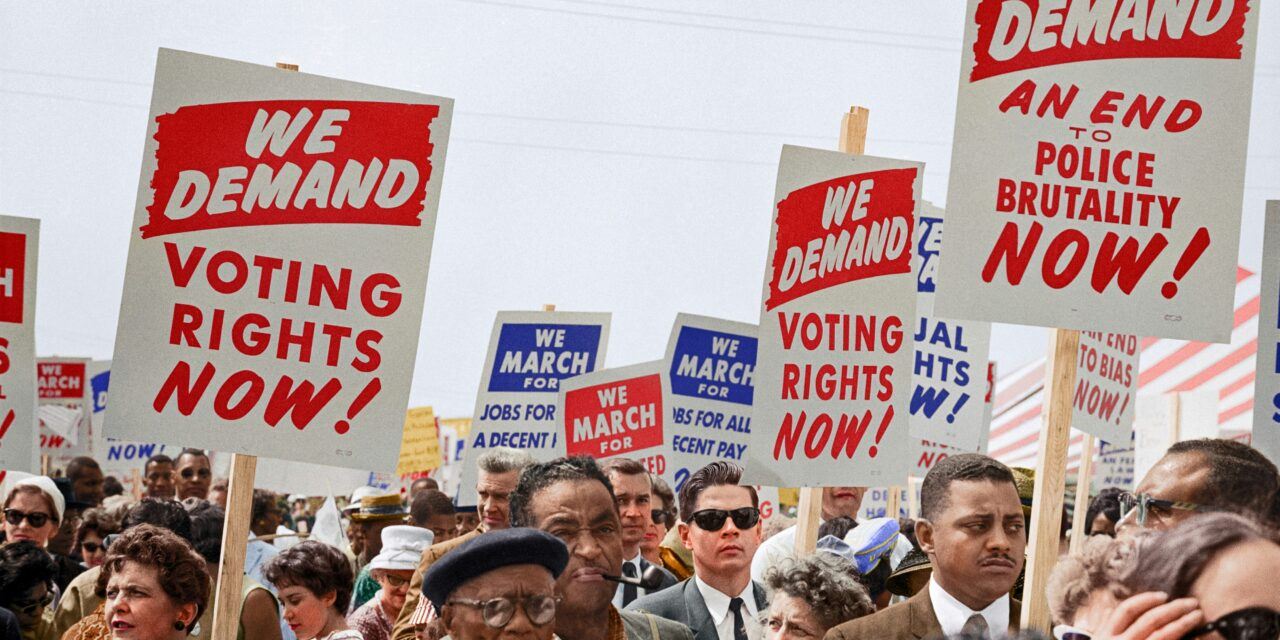
On June 19, the U.S. celebrates Juneteenth — the anniversary of the day enslaved people in Texas finally learned they were free, more than two years after the Emancipation Proclamation. It’s a reminder that freedom must be demanded and protected in every generation.
Freedom Summer
Juneteenth kicks off Freedom Summer — a nationwide season of action to mobilize communities, register voters, and protect the vote.
A democratic society must empower voters to the fullest extent possible, make elections free and fair, and refrain from erecting unnecessary barriers to voting. And yet, in May, the U.S. Supreme Court dealt a devastating blow to American democracy and elections by gutting a key provision of the Voting Rights Act. In the aftermath of that ruling, Southern politicians are now rushing to change voting maps to weaken the power of Black and Brown Americans.
But We the People won’t stand for our freedoms being attacked. Democracy Forward is proud to join a coalition of civil rights, faith, labor, and community organizations to register voters, educate our neighbors, and proclaim our freedom loudly. Freedom Summer is a nationwide season of action — opening Juneteenth Week, running through the John Lewis Days, Voter Registration Day, and Election Day. Learn more and join Freedom Summer.
Voter suppression is antithetical to democracy. Voting must be open, accessible, and protected for every eligible citizen because free and fair elections are the foundation of a functioning democracy. It’s imperative that we act now to protect our right to vote and defend the values that uphold our democracy.
The voting process can be complex and, at times, overwhelming, particularly for first-time voters. Developing a clear plan to vote can mitigate uncertainty and increase the likelihood that an individual will cast a ballot. Below are resources that may be helpful to make a plan to vote..
Register to Vote
Individuals should be sure to verify voter registration status well in advance of the state’s registration deadline, which may occur up to 30 days prior to an election. Early verification allows sufficient time to update or re-register if necessary. As voter registration procedures vary by state, individuals are encouraged to consult their state’s election authority for specific guidance.
Selecting A Voting Method
Voting by mail is one way voters may participate in an election other than in-person at a voting location. This process is also called absentee voting in some communities. Each state has its own rules on who can vote by mail. Some states require an excuse to vote by mail, while other states automatically mail every registered voter a ballot before an election. Examples of excuses may include illness, injury, disability, traveling outside of your jurisdiction or locality on Election Day, being a college student, or serving in the military. Individuals should check their Secretary of State’s website for specific vote-by-mail requirements.
In-person voting typically takes place at a polling place on Election Day, but voters may have the option to vote before Election Day at a polling location, vote center, or elections office. Voters should consult their local election office for detailed information regarding election dates, polling hours, and available voting options.
Linked below are additional resources that may be useful as you navigate the voting process:
- Make a Plan to Vote 101
- Make Your Plan To Vote
- Voting Plan Checklist
- Vote 411
- Vote.org
- Rock the Vote
- ¡Ve y Vota!
- APIAVote
- Election Protection
Know Your Rights
People have important constitutional and legal rights – regardless of whether they are walking, talking, driving, protesting, praying, at the doctor, in a house of worship, at work, in school, voting or anything in between. Democracy Forward’s Know Your Rights Hub connects people to reliable, practical information, printable materials, and multilingual tools created by leading expert organizations to understand your rights and how to exercise them.
Democracy 2025, the strategic legal network of 700+ organizations housed at Democracy Forward, has been credited with coordinating the largest and most effective strategy against unlawful administrative action in modern history. Their compilation of Know Your Rights resources across the pro-democracy community can be found here.